What is The Role of Self Cleaning Filter in Pumped Storage Power Plant
The Role of Self-Cleaning Filter in Pumped Storage Power Plants
In pumped storage power plants, water is pumped from the lower reservoir to the upper reservoir during off-peak periods to store energy, and released through turbines to generate electricity during peak demand.
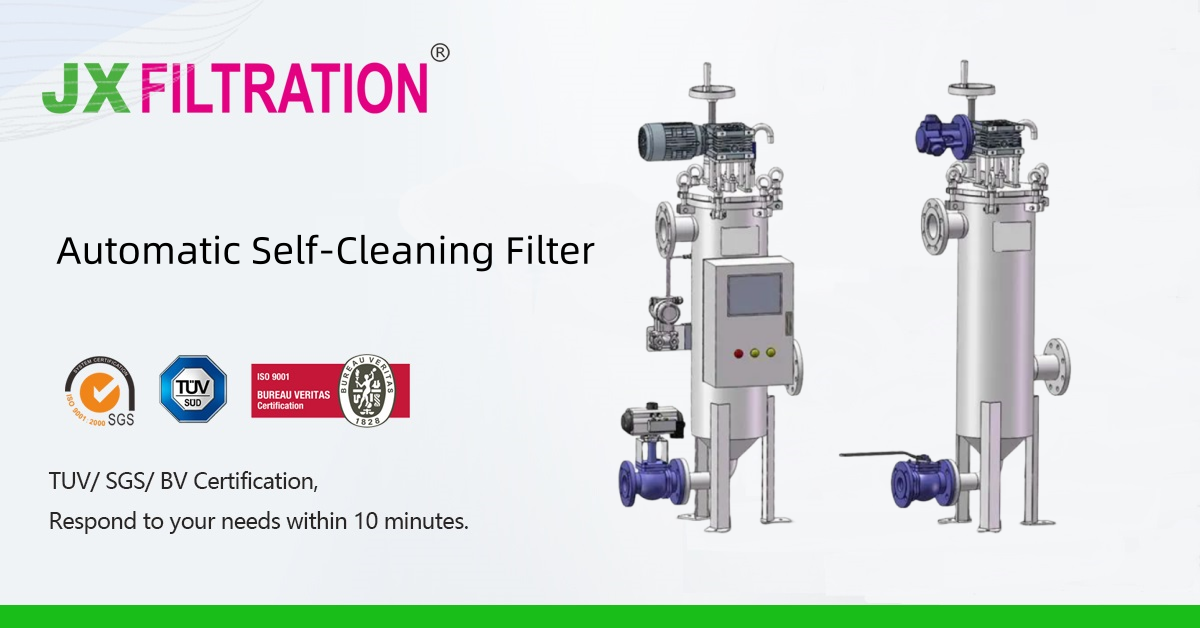
The entire system operates under high load, long cycles, and frequent start-stop conditions, placing strict requirements on water quality. Self-cleaning filters therefore play a critical role in water quality assurance and equipment protection.
1. Water Quality Risks and Potential Hazards
In circulating water, cooling water, lubricating oil cooling systems, and related auxiliary systems, the presence of the following impurities may occur:
-
silt and sand
-
metallic oxides
-
microorganisms and organic particles
-
mechanical debris
When particle size is ≥ 50 μm, it may result in:
-
wear of turbine runners and guide vanes
-
damage to bearings and sealing components
-
blockage of valves, nozzles, and pipelines
-
reduced heat-exchange efficiency in cooling systems
→ ultimately leading to reduced unit efficiency, shorter maintenance intervals, and increased operational risk
2. Pain Points of Traditional Filtration
Traditional filtration equipment is mainly manual or semi-automatic and presents the following issues:
-
requires shutdown for cleaning → affects continuous dispatch capability
-
heavy manual labor for cleaning
-
low cleaning efficiency
-
cannot respond effectively to sudden increases in contaminants (e.g., post-rainfall sediment surge)
-
does not meet the needs of unattended or minimally staffed power stations
This is inconsistent with the high reliability and high automation requirements of pumped storage power stations.
3. Core Functions of Self-Cleaning Filters
Self-cleaning filters offer the following characteristics:
-
automatic online backwashing
-
continuous operation without shutdown
-
multiple control modes: differential pressure / time / manual
-
strong adaptability to high-sediment and fluctuating water quality
-
long maintenance intervals with minimal manual intervention
Therefore, in the pumped storage industry, self-cleaning filters primarily serve as:
-
✓ critical protection devices for turbines, bearings, and coolers
-
✓ front-end barrier for circulating and cooling water systems
-
✓ anti-blockage protection for pipelines and valves
-
✓ an essential element ensuring long-term, stable operation
4. Typical Application Points
Self-cleaning filters are commonly used in:
-
circulating cooling water systems
-
unit sealing and cooling water
-
hydraulic oil cooling water systems
-
HVAC and fire-fighting make-up water
-
ecological make-up water and bypass treatment systems
In summary:
👉 In pumped storage power plants, self-cleaning filters function as both the “shield of the equipment” and the “purification gateway of the system.”
Any Requirements, Contact Us Now!
Kris
Email/Teams: kris@filtrationchina.com
Mobile/Whatsapp/Wechat: +86 18980776200