How to Select the Right Self-Cleaning Filter
Self-cleaning filters are essential for continuous, low-maintenance solids removal in water and liquid processes. Choosing the wrong type leads to frequent clogging, high energy costs, or premature failure. Follow these key selection criteria to ensure optimal performance.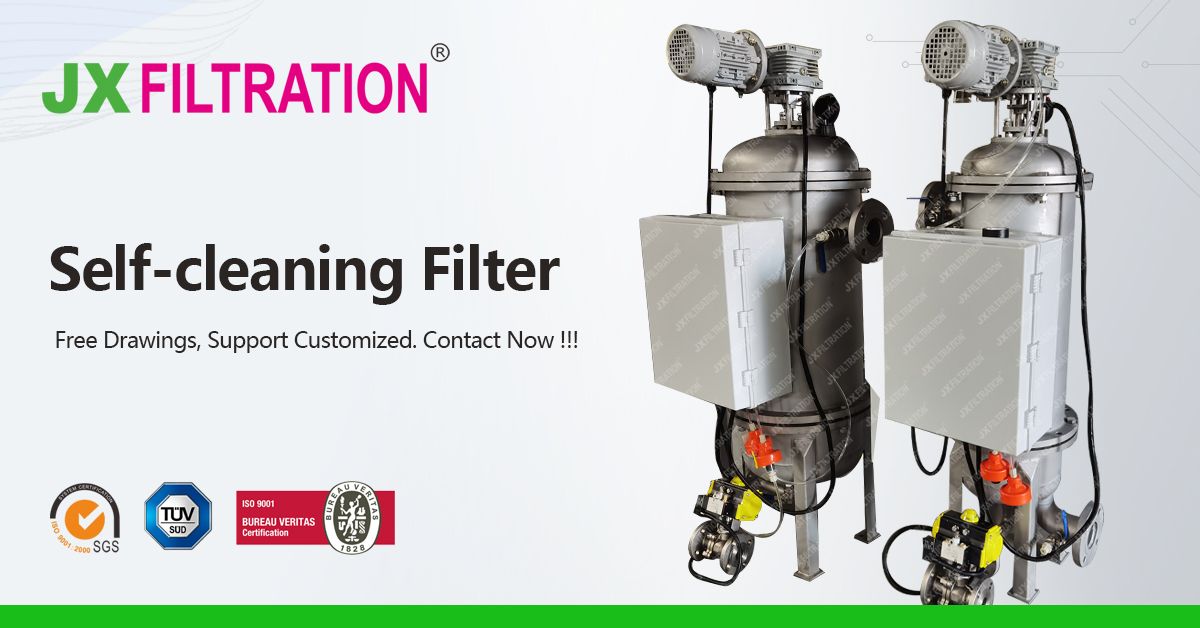
1. Filtration rating (micron)
Determine the minimum particle size you must remove. Coarse filtration (500–3000 µm) suits cooling water or pre-treatment; fine filtration (10–100 µm) is needed for nozzles, sprayers, or sensitive equipment. Avoid over-specifying – a finer rating than necessary increases cleaning cycles and pressure loss.
2. Flow rate and pressure
Calculate normal and peak flow. The filter’s nominal flow capacity should exceed your maximum flow by 10–20%. Check the available system pressure: self-cleaning filters typically require 0.2–1.0 MPa. If pressure is low, choose a screen-type design with low hydraulic resistance.
3. Contaminant characteristics
Is the debris soft (algae, sludge) or hard (sand, rust)? Soft particles may need a brush-type cleaning mechanism; hard particles respond well to suction scanners. For high solids concentration (>200 mg/L), select a filter with a larger dirt-holding capacity or a continuous-blowdown feature.
4. Cleaning mechanism
-
Suction scanners – low water consumption, suitable for fine filtration.
-
Motor-driven brushes – handle fibrous and sticky particles well.
-
Backwash (reverse flow) – simple and reliable for granular solids.
5. Material compatibility
For corrosive liquids (seawater, chemicals), use 316L stainless steel or duplex stainless steel. For drinking water or food service, select FDA-compliant materials. Carbon steel can be used for clean, neutral water.
6. Control and automation
Choose between differential pressure (ΔP), time, or demand-initiated cleaning. For unmanned sites, a PLC with remote alarm and automatic backwash is recommended.
7. Connection and space
Confirm flange size (DN/ANSI) and available installation space. Vertical or in-line designs may be required for tight layouts.
By evaluating these parameters – filtration rating, flow, solids type, cleaning method, material, and automation – you can reliably select a self-cleaning filter that minimizes downtime and lowers total cost of ownership. Always request a full performance curve and test data from the supplier before final selection.
Any Requirements, Contact Us Now!
Grace
Email/Teams: grace@filtrationchina.com
Mobile/Whatsapp/Wechat: +86 17269571160